
October 21, 2026
Austrian President Visits ISTA
Alexander Van der Bellen gets firsthand look at fundamental research
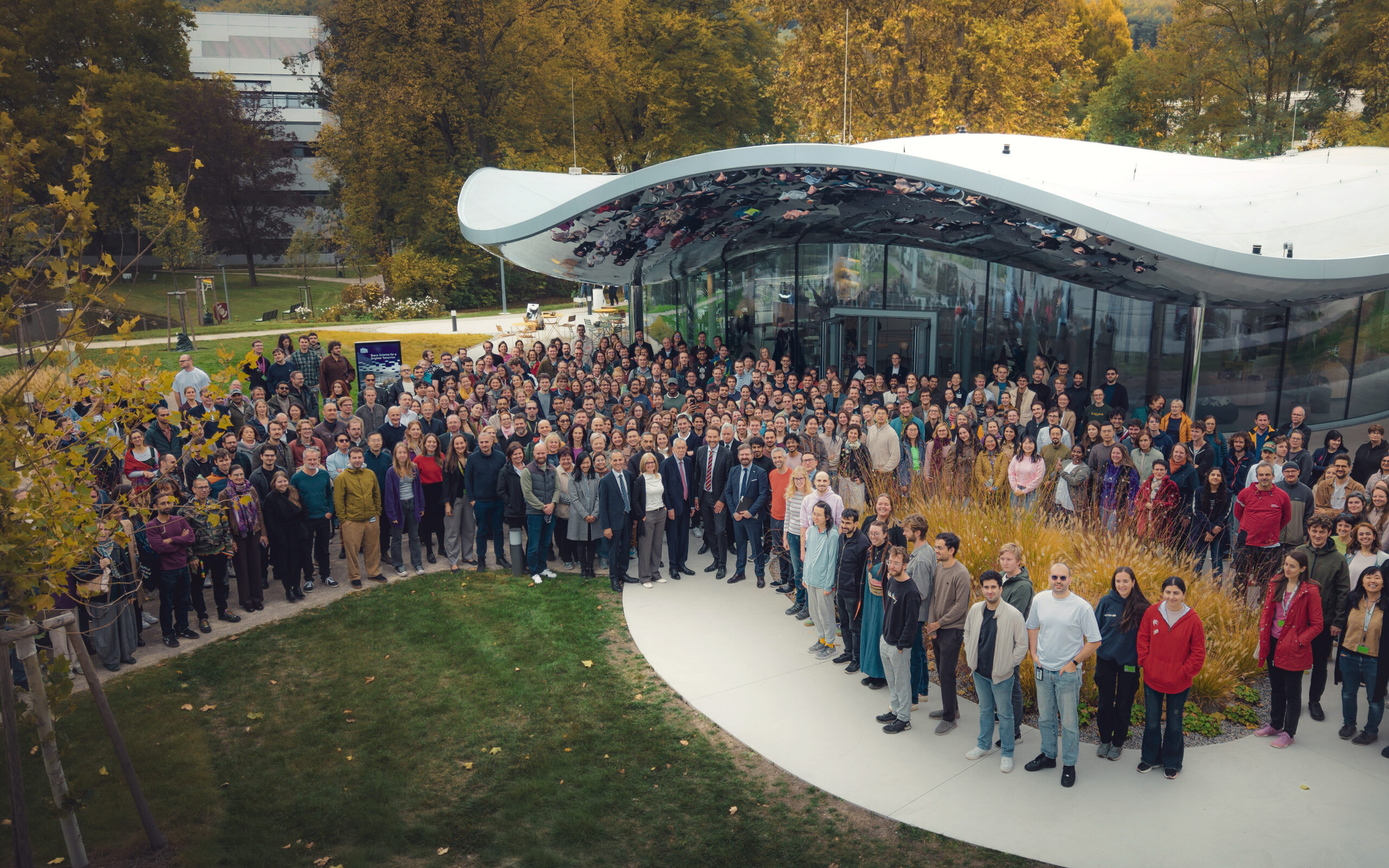
Austrian President Alexander Van der Bellen visited the Institute of Science and Technology Austria (ISTA) on October 21, 2026. During a tour of the campus and discussions with ISTA leadership, professors, postdocs, and PhD students, he gained insight into current cutting-edge research projects and ISTA’s continued development into an internationally recognized center of scientific excellence. The visit also marked the 20th anniversary of the 2006 federal law that laid the foundation for ISTA.
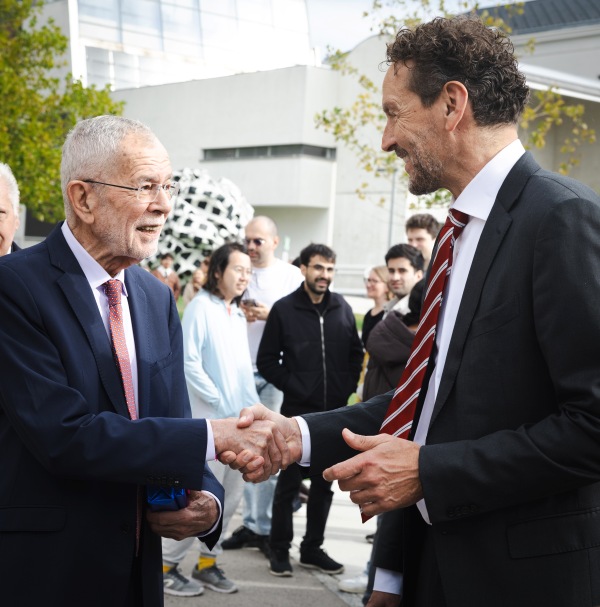
Van der Bellen was officially welcomed to ISTA’s modern campus in Klosterneuburg by ISTA President Martin Hetzer, Managing Director Georg Schneider, and Chief Organizational Development Officer Barbara Abraham.
In an introductory presentation, Hetzer outlined the Institute’s history—still young but marked by strong growth—and emphasized ISTA’s commitment to world-class research and to fostering the next generation of scientists.
“We are greatly honored to welcome Austrian President Alexander Van der Bellen to our campus,” said Hetzer, who has led ISTA since 2023.
“The visit offers an opportunity to jointly reflect on the bold vision that has guided ISTA from the outset: to push the frontiers of fundamental research, train the next generation of scientists, and make our findings accessible and relevant to society and the economy. We’ve already come a long way and strive every day to stay true to this vision.”
Van der Bellen emphasized: “The Institute of Science and Technology Austria, established only in 2009, is already a world-renowned research institute. Research in Austria ranks among the very best on the globe—and ISTA’s dedicated researchers play an active role in this.” ISTA’s dynamic evolution is also reflected in numbers: When the Institute first opened its doors in 2009, it had just 37 employees. Today, it is home to 95 research groups working across the natural sciences, mathematics, and computer science, and is expected to grow even further to 150 groups and more than 2,000 employees by 2036. With professors, postdocs, PhD students and staff representing more than 80 nationalities, ISTA also has a distinctly international campus community.
Insights into energy, enzyme & brain research
Van der Bellen’s visit also included conversations with three faculty members who each presented the work of their research groups.
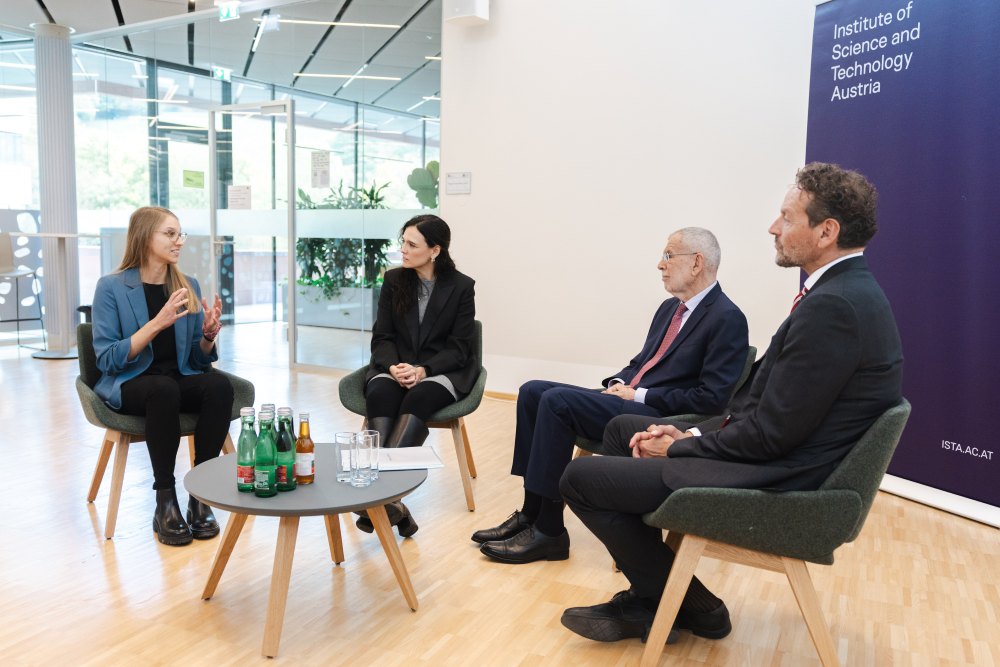
These included Verbund Professor for Energy Sciences and Head of the Werner Siemens Thermoelectric Laboratory Maria Ibáñez, a materials scientist, who shared insights into her energy research. In the future, her findings could, for example, support more effective heat management in electronics and wearable devices.
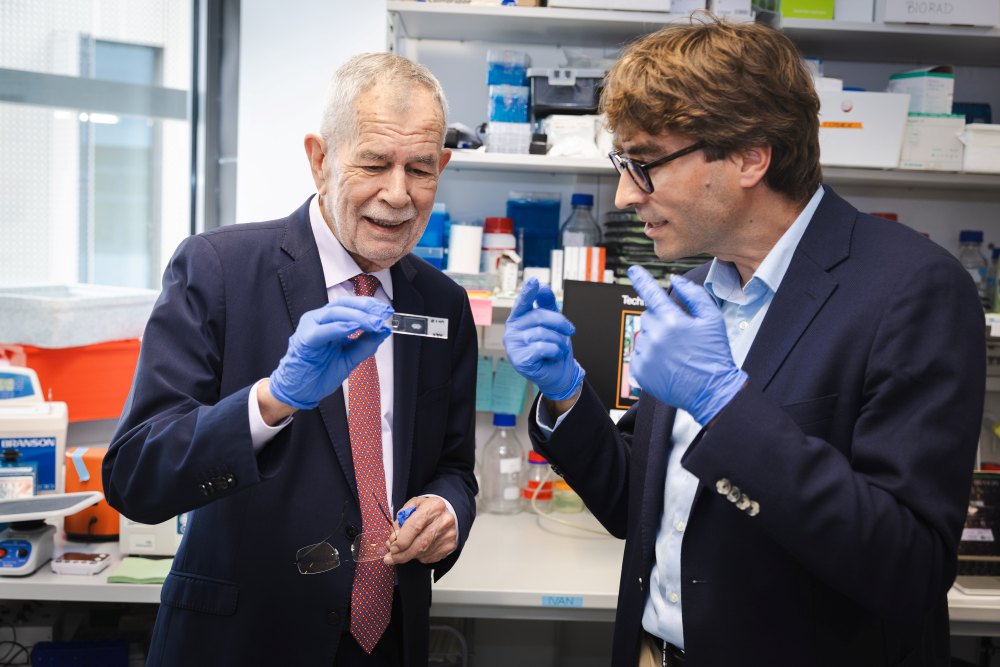
Assistant Professor Julia Reisenbauer presented her research on enzymes. The chemist investigates questions that could be relevant to fields such as medicine and agriculture — for example, how active pharmaceutical ingredients can be produced more quickly and easily, or how harmful chemicals that persist in the environment for a long time can be broken down using enzymes. Van der Bellen also visited the lab of Johann Danzl, whose patented imaging method expands brain tissue samples 16-fold. This enables novel, highly detailed images of the brain to be captured using conventional light microscopes. His research is intended to contribute to a better understanding of the brain’s structure and function and was recognized by science magazine Nature as one of seven groundbreaking future technologies.
President engages with young researchers
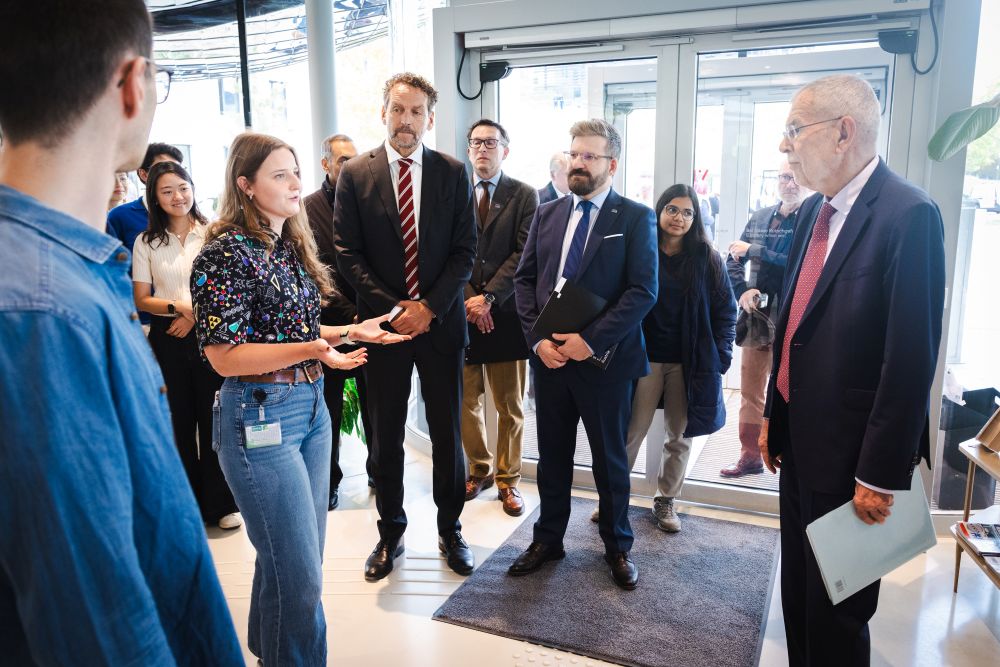
At the VISTA Science Experience Center—a space dedicated to fostering dialogue between research and society—Van der Bellen met with around 30 PhD students and postdocs. Their wide-ranging conversations covered their research topics and the opportunities and distinctive aspects of pursuing a career in science.
20th anniversary of ISTA law
At the conclusion of the visit, Van der Bellen and Hetzer cut a birthday cake to mark the 20th anniversary of the May 2006 law that laid the foundation for ISTA.
The idea for a new, internationally competitive Austrian institute for basic research was first publicly proposed by Austrian Nobel laureate Anton Zeilinger in 2002; an international committee then developed the founding concept following a feasibility study. ISTA’s campus first opened in 2009, with the first PhD students graduating in 2015.


